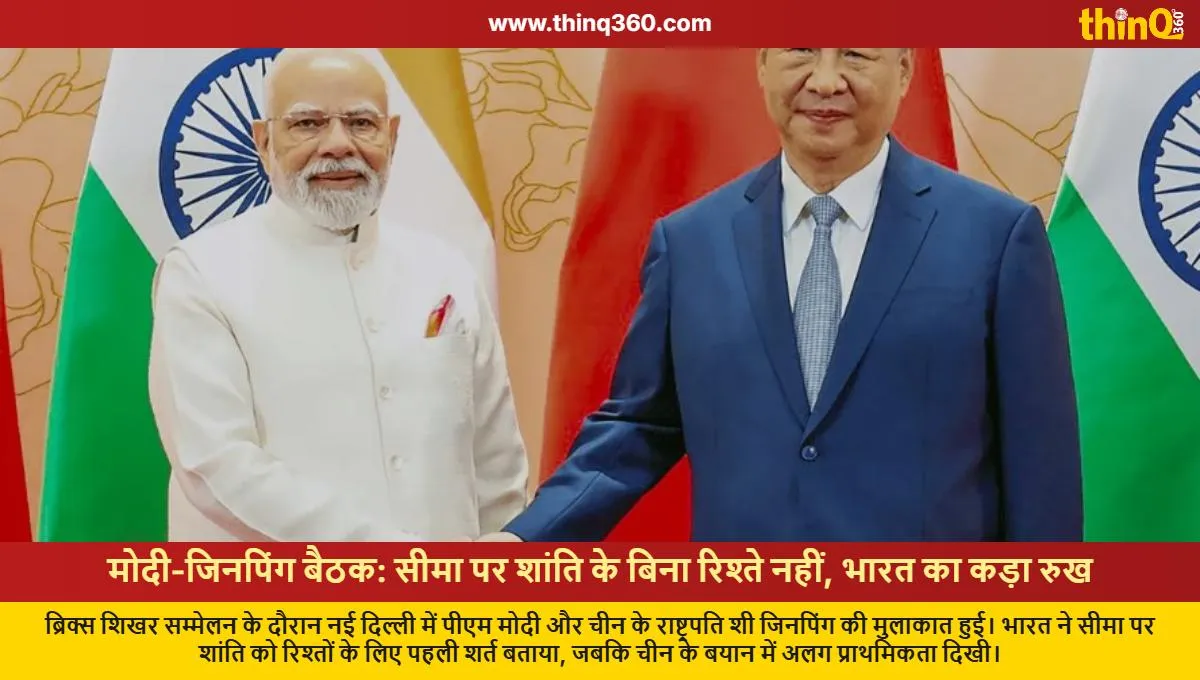
India stated that both countries must strictly adhere to existing border agreements and mutual understandings.
Mutual Respect is Essential
PM Modi said that any differences between the two countries should not turn into disputes. He stressed making mutual respect, sensitivity to each other's concerns, and shared interests the basis of the relationship. Both leaders agreed on a solution acceptable to both sides, which would include the long-term interests of the people of both nations.
China's Perspective: Relations and Border Dispute Together
On the other hand, China's statement used different terminology for the border issue. China said that both countries should seek a solution to the border dispute while also advancing comprehensive bilateral relations.
China spoke of making progress on both issues simultaneously, which differs from India's stance. India believes that progress in other areas is not possible without peace on the border.
Key Difference in Statements
This is the biggest and most significant difference between the statements of the two countries.
- India: Peace on the border is the foundation for the development of relations.
- China: The border dispute and comprehensive relations should be advanced simultaneously.
The Shadow of the Galwan Conflict
Relations between India and China became severely strained after the Galwan Valley conflict in 2020. In this violent clash, 20 Indian soldiers and four Chinese soldiers were killed, leading to a prolonged standoff on the border.
However, in recent times, some steps have been taken towards reducing military tensions and normalizing relations between the two countries. Resuming direct flights and increasing people-to-people movement are also being considered.
Trade and Connectivity Also Discussed
Modi and Xi also discussed strengthening trade and economic relations during the meeting. India raised its concerns about the trade imbalance and supply chain issues.
Xi Jinping spoke of viewing India-China relations from a strategic and long-term perspective and described the two countries as partners, not adversaries. He emphasized increasing cooperation. Overall, this meeting was an attempt to improve relations, but the statements make it clear that the priorities of the two countries on the border dispute still differ.

 जोगेन्द्र सिंह शेखावत