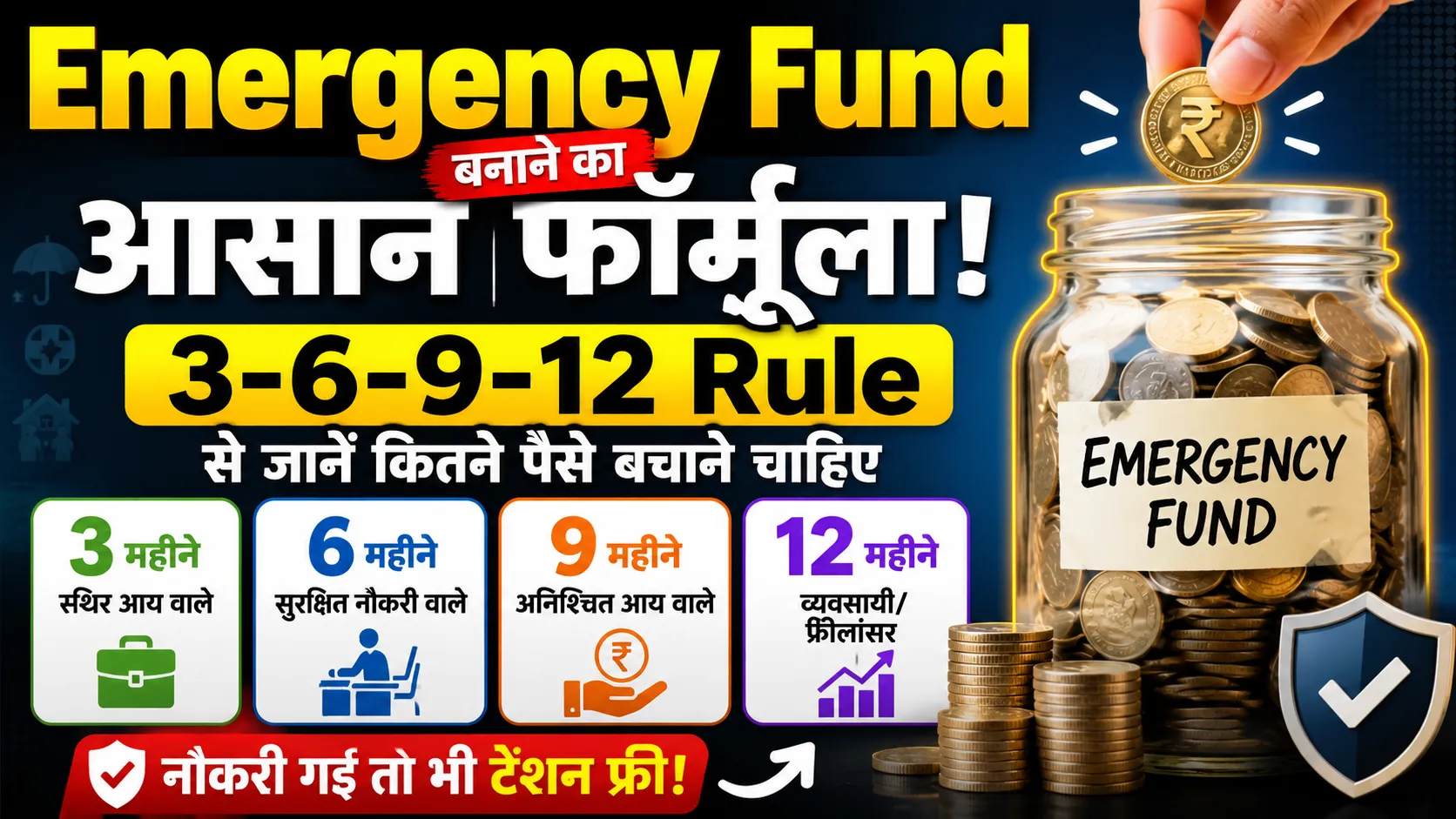
The 3-6-9-12 rule is the simplest and most practical formula for building an emergency fund.
Salaried individuals need 3 to 6 months of expenses, while irregular earners require 9 to 12 months.
Calculate only essential monthly expenses like rent, groceries, EMIs, and school fees.
Keep 30-40% of the fund in savings accounts and the rest in safe liquid debt funds.
New Delhi | In this era of financial uncertainty, sudden job loss or a major medical expense can wipe out your entire lifetime savings. Having a robust emergency fund is absolutely essential to provide a solid safety net during such crises.
Financial experts believe that an emergency fund is the strongest weapon to avoid falling into debt traps during tough times. It successfully safeguards your regular savings and long-term investment goals.
The Effective 3-6-9-12 Rule for Emergency Funds
In financial planning, the '3-6-9-12 rule' is considered a highly popular and practical formula. This rule determines the ideal size of your fund based on income stability and family responsibilities.
This simple formula guides you on how many months of expenses you must keep secure to remain self-reliant during a crisis. It helps individuals from all walks of life secure their financial future.
Regular Income and Low Responsibility: The 3-Month Rule
If you are single, have no major financial dependents, and possess a highly stable job, this rule applies to you. You should save at least three months of living expenses.
This amount is perfectly sufficient to handle immediate short-term crises, such as minor medical issues or transition periods between changing jobs.
Regular Income and Family Dependents: The 6-Month Rule
If you have a stable source of regular income but your family is financially dependent on you, you must maintain at least six months of monthly expenses as an emergency reserve.
This reserve helps seamlessly manage family medical costs, children's school fees, and home loan EMIs without facing any sudden financial disruption.
Irregular Income and Low Responsibility: The 9-Month Rule
If you work as a freelancer, engage in project-based contracts, or run a business where monthly income fluctuates, you need to be much more cautious.
In such scenarios, even if you do not have dependents, you should keep at least nine months of essential living expenses safely tucked away in your reserve.
Irregular Income and Family Dependents: The 12-Month Rule
If your income is highly irregular and you also bear the responsibility of supporting a family, you need the strongest possible financial shield. You should maintain a full year's fund.
A twelve-month fund provides immense peace of mind and financial stability during prolonged business downturns, economic recessions, or severe health crises.
"The size of an emergency fund cannot be identical for everyone. Your job stability and family responsibilities dictate its true scale." - Balwant Jain, Investment Advisor
Who Needs a Larger Emergency Fund?
Freelancers, contract-based professionals, and small business owners do not experience a constant flow of monthly income. Market fluctuations directly impact their earnings.
Additionally, families with elderly members who incur high medical bills regularly must also maintain a larger emergency reserve than the standard recommendation.
If you have significant debt obligations, such as home loans or car EMIs, a larger fund is critical to prevent defaulting on payments during crises.
How to Calculate Your Essential Monthly Expenses?
Building an emergency fund begins with identifying your actual essential monthly expenses. Include only those expenses that are absolutely non-negotiable.
These expenses must cover house rent, groceries, utility bills, children's school fees, critical medicines, and outstanding loan EMIs.
Non-essential expenses like dining out, entertainment, and luxury shopping must be completely excluded from this calculation to arrive at an accurate target.
Understanding the Calculation with an Example
Suppose your total essential monthly expenses sum up to 25,000 Rupees. If you aim to build a six-month emergency fund, your target is very clear.
You must multiply 25,000 by 6, which equals a total target of 1,50,000 Rupees. This amount should always remain easily accessible to you.
No Need to Accumulate a Lump Sum Overnight
There is absolutely no need to panic upon seeing a target of 1.50 lakh Rupees. No one can build such a massive fund in a single day.
You can start this journey with small monthly savings of just 500 or 1,000 Rupees. The key is maintaining consistency in your saving habits.
Whenever you receive bonuses, tax refunds, or extra income from side gigs, allocate a portion of it directly into this emergency fund.
Where Should You Invest Your Emergency Fund?
The primary objective of this fund is not to maximize returns, but to ensure immediate availability of cash when needed. Thus, safety and liquidity are paramount.
Never invest this money in the stock market, speculative penny stocks, or highly volatile mutual funds where there is a risk of capital erosion.
The Ideal Split Between Liquidity and Safety
According to experts, you should keep 30 to 40 percent of the fund in a savings account or bank fixed deposits (FD) for instant withdrawal access.
The remaining 60 to 70 percent can be placed in low-risk liquid mutual funds or overnight funds, which offer slightly better returns than traditional savings accounts.
Regular Review of Your Fund is Mandatory
Over time, inflation rises and your lifestyle and financial responsibilities change. Therefore, review your emergency fund every six months.
If your monthly expenses or loan EMIs have increased, you must adjust and increase your emergency fund target accordingly.
Financial security lies not just in earning well, but in planning wisely for unexpected storms. Start building your emergency fund today.

 जोगेन्द्र सिंह शेखावत