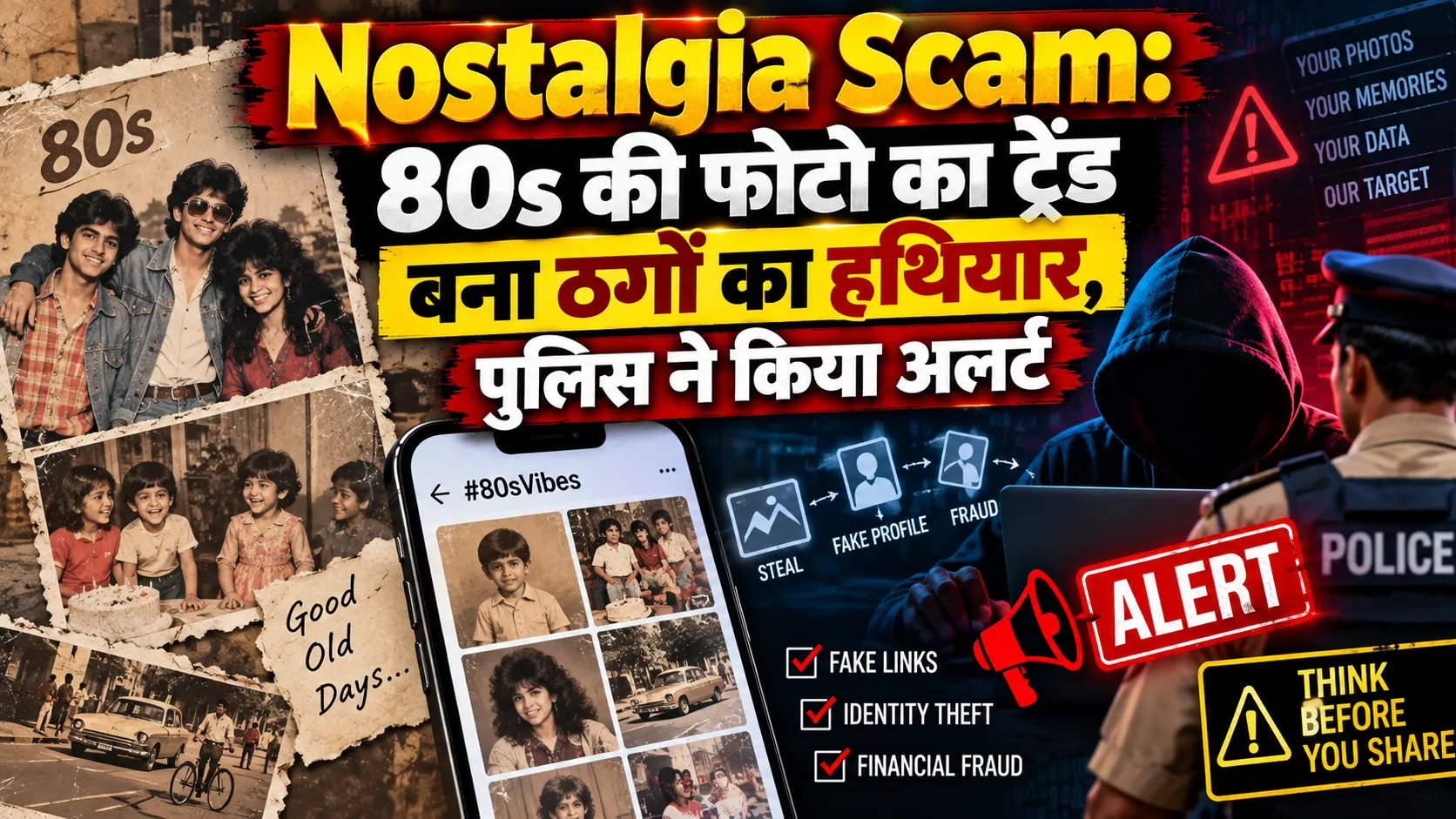
What is the 'Nostalgia Scam'?
The Nostalgia Scam is a new method of cyber fraud where scammers take advantage of people's affection for old memories (Nostalgia).
They are targeting people under the guise of the 80s retro trend. It is a dangerous cyber fraud committed in the name of old memories.
How Does This Scam Work?
Cybercriminals are trapping people by exploiting this trend. The method is very simple yet effective.
- Fake Links and Messages: Scammers send a link with attractive messages like "Give your photo an 80s look" or "Create a retro portrait for free" on social media and WhatsApp.
- Malicious APK File: Upon clicking the link, the user is asked to download a fake app (APK file) that is not available on the Play Store.
- Data Theft: As soon as the app is installed, it requests essential permissions like access to the phone's gallery, camera, contacts, and messages. Once permission is granted, scammers steal OTPs, banking details, and other personal information.
- Emptying Bank Accounts: Using the stolen information, criminals withdraw money from bank accounts or carry out incidents like Identity Theft.
Police in Several States Have Issued Warnings
Seeing this growing threat, police in several states including Jharkhand, Himachal Pradesh, Uttar Pradesh, Telangana, and Karnataka have issued official warnings and advisories.
Jharkhand: Advice from Bokaro Cyber Police
Bokaro Cyber Police Station in-charge Pawan Kumar has advised people to be cautious about AI trends. He said that one must check the privacy policy of any unknown app before uploading photos.
Himachal Pradesh: Alert from CID Cyber Crime Bureau
Under the leadership of Himachal Director General of Police Ashok Tiwari, the State CID Cyber Crime Bureau has issued a warning. He said, "Think, understand, then upload." Uploading pictures on unknown AI apps increases the risk of deepfake videos, fake profiles, and blackmail.
Uttar Pradesh: Warning from Moradabad Police
In Moradabad, SP City Kumar Ran Vijay Singh and cyber experts reported that scammers are hacking phones by sending APK files. Prashant Singh from the cyber police station warned that giving permissions to unknown apps can lead to personal data theft.
The Biggest Threat: Biometric Data Leak
When people upload their high-quality pictures to ChatGPT or other AI tools, they unknowingly leak their most valuable data - their facial biometric data.
This data can be used for identity theft, fraudulent KYC verification, or Aadhaar-linked scams. It can also be used to defame someone by creating deepfake videos.
What to Do in Case of Fraud?
Do not panic if you become a victim of cyber fraud. Immediately call the National Cyber Crime Helpline number 1930.
You can also file your complaint online at cybercrime.gov.in. Remember, your old memories are precious, but your digital security is even more important. Stay alert, stay safe.

 जोगेन्द्र सिंह शेखावत