Politics has intensified over the Rajasthan OBC commission report. The 900-page report reveals the political dominance of just 11 out of 92 castes, which the Congress has called a divisive conspiracy.
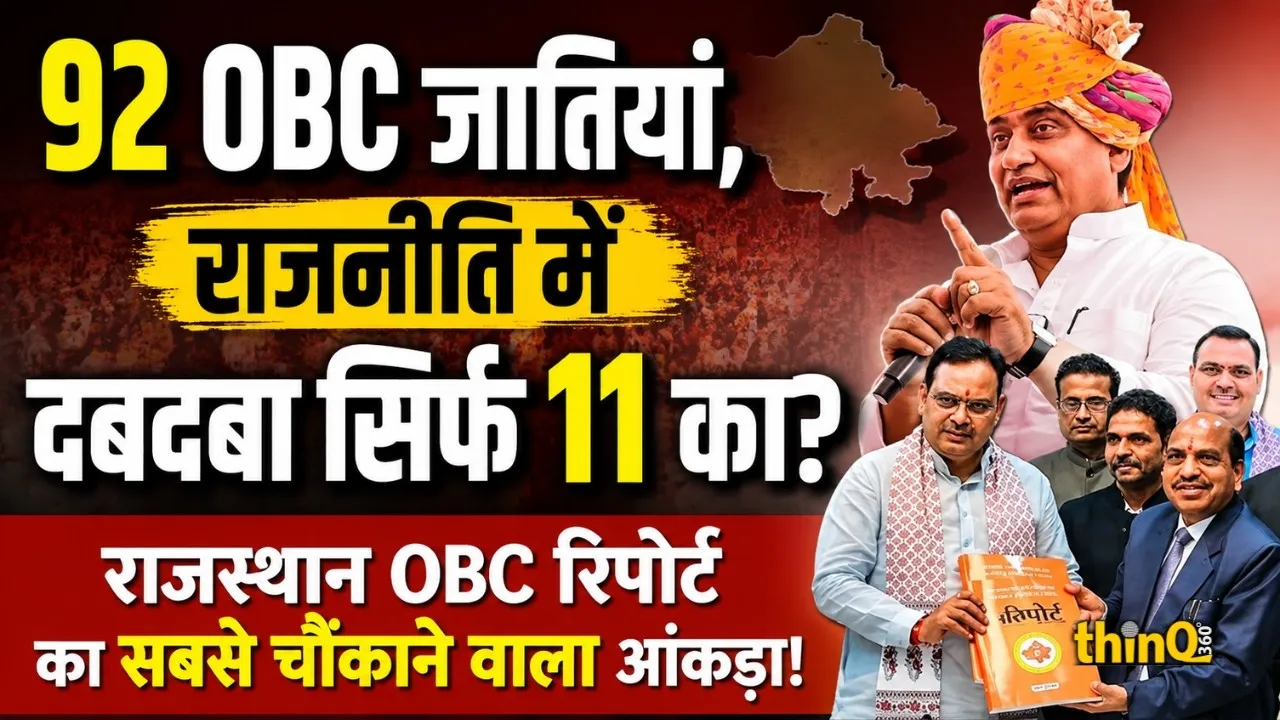
The Rajasthan OBC Commission submitted its 900-page report to Chief Minister Bhajanlal Sharma.
According to the report, only 11 out of 92 OBC castes have political dominance.
The government described it as a step towards strengthening democracy.
The Congress termed the report a deliberate conspiracy to divide the OBC community.
Rajasthan |
A commission's report on the political representation of Other Backward Classes (OBC) in Rajasthan has caused a stir in the state's politics. The report, submitted to Chief Minister Bhajanlal Sharma, has revealed several startling figures, leading to a round of accusations and counter-accusations between the ruling party and the opposition.
What's Special in the Report?
The Rajasthan OBC Political Representation Commission has submitted a detailed 900-page report in two volumes to the government. The commission took fifteen months to prepare this report, although a three-month deadline was initially set.
The commission conducted an in-depth survey of a total of 92 OBC castes in the state. It evaluated the social, economic, and political status of each caste with data.
Dominance of 11 Castes
The most significant finding of the report is that only 11 out of 92 OBC castes have a dominant position in politics. More than a thousand members from these 11 castes have either contested elections or become public representatives. In contrast, the political participation of the remaining castes has been negligible.
According to the commission's chairman, retired judge Madan Lal Bhati, the survey was conducted based on 19 parameters. Its main objective was to create a comprehensive database on the OBC community.
Government and Opposition Face-Off
Political rhetoric has intensified since the report was released. Chief Minister Bhajanlal Sharma welcomed the report, calling it a step towards strengthening democracy at the grassroots level.
The Chief Minister also linked it to the government's vision of 'One State, One Election'. He said that holding urban body and panchayat elections simultaneously would prevent administrative work from being hampered by frequent elections and would also save resources.
Meanwhile, the Congress has raised serious questions about the report. Rajasthan Congress President Govind Singh Dotasra has termed it a conspiracy to divide society.
Dotasra said, "From the information that has emerged so far, it seems a detailed arrangement has been made to pit different castes against each other. Who asked the government to conduct such a caste survey and make it public?"
He also questioned the 15-month delay in submitting the report and stated that if any attempt to create a divide among OBC castes is found in the report, the Congress will strongly oppose it.
This report has come at a time when the process for urban body elections in the state is about to begin. It is believed that the election schedule may be announced around August 17.
Political analysts believe that this report could become a major basis for ticket distribution and seat allocation in the upcoming elections. It will be crucial to see whether this report actually helps in bringing backward castes into the political mainstream or if it remains merely an electoral tool.

 Pradeep Budawat