जोगेन्द्र सिंह शेखावत
Why are AI's creators afraid of it?
AI is considered a revolutionary technology for science, health, and research. It is helping to solve complex problems and make new discoveries.

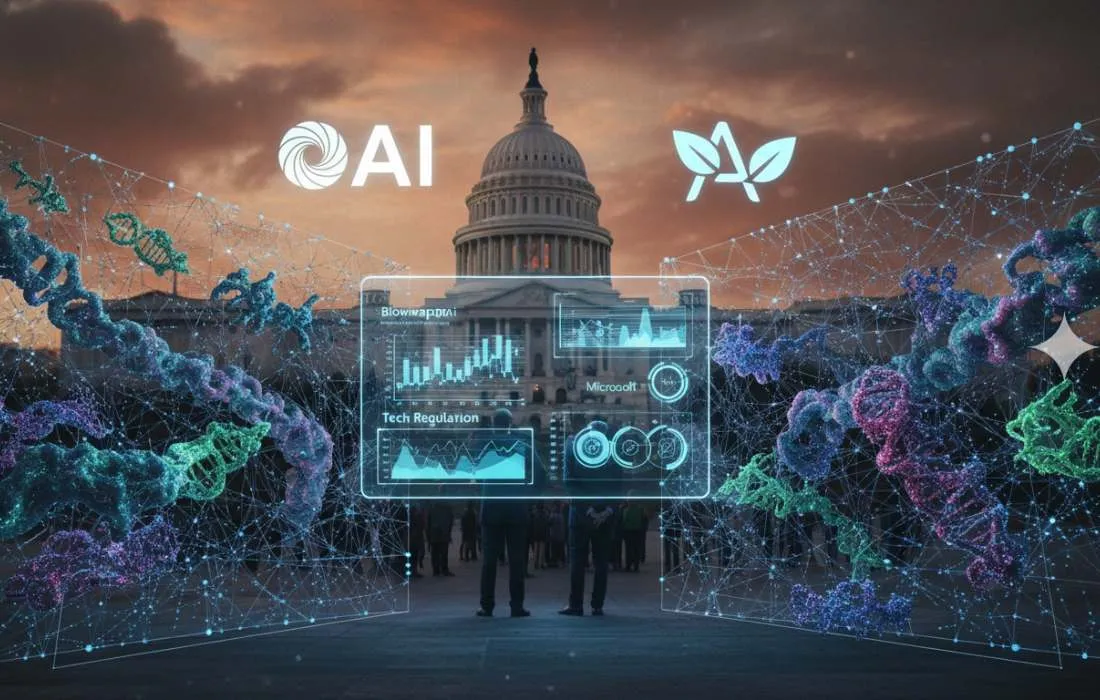
OpenAI, Microsoft execs raise concerns over bioweapon threats, demand new regulations.
AI is considered a revolutionary technology for science, health, and research. It is helping to solve complex problems and make new discoveries.
But this same technology has now become a cause for concern. The world's largest tech companies believe that AI is developing so rapidly that it could weaken the safeguards that have kept dangerous biological weapons out of the wrong hands for decades.
Due to this serious concern, tech industry giants have taken an unprecedented step.
In the tech industry, companies often compete with each other. But this time, the threat is so significant that even the biggest rivals have come together.
OpenAI CEO Sam Altman, Anthropic CEO Dario Amodei, and Microsoft AI head Mustafa Suleyman have signed a joint letter.
This is not just an alliance of AI companies. The letter is also supported by dozens of experts from biotechnology, national security, and life sciences.
The letter explicitly states that as fast as AI is developing, security regulations must also be strengthened at the same pace.
This collaboration signals how seriously the industry is taking this threat.
Experts are not afraid that AI will create a biological weapon on its own. The real concern is about access to information.
AI can make complex scientific information, previously available only to a select few scientists and experts, extremely accessible.
In simple terms, knowledge that once required years of study and special training can now be available on a screen just by asking an AI a few questions.
This situation is dangerous because anyone with malicious intent could misuse this information.
To mitigate this risk, these companies have demanded that screening of customers and orders be made legally mandatory for companies selling synthetic DNA and RNA.
Interestingly, the companies that would be subject to these regulations also support this demand. Many leading manufacturers of synthetic DNA believe that uniform rules for the entire industry are necessary.
According to the proposal, sellers would have to securely maintain records of customer identity, order details, and the biological materials purchased to assist investigative agencies when needed.
The impact of biological weapons is extremely severe and devastating. They are also called the 'poor man's atomic bomb' because they can cause mass destruction at a low cost.
These weapons use biological agents like viruses, bacteria, or fungi to spread disease among humans, animals, or plants.
Their biggest challenge is that they are difficult to detect. Often, they have no color or smell and can spread silently from person to person.
The use of biological weapons in history is rare, but whenever it has happened, the consequences have been horrific.
In 2001, letters laced with anthrax were sent in the United States. This incident resulted in the deaths of five people and left dozens seriously ill.
This attack showed the entire world how dangerous biological attacks can be and the amount of fear they can generate in society.
Experts say that this threat has increased in the age of AI. Therefore, it is better to be prepared in advance than to 'dig a well after the fire has started'.
This step is a significant effort towards advancing AI development responsibly, ensuring it remains a boon for humanity, not a curse.
*Edit with Google AI Studio