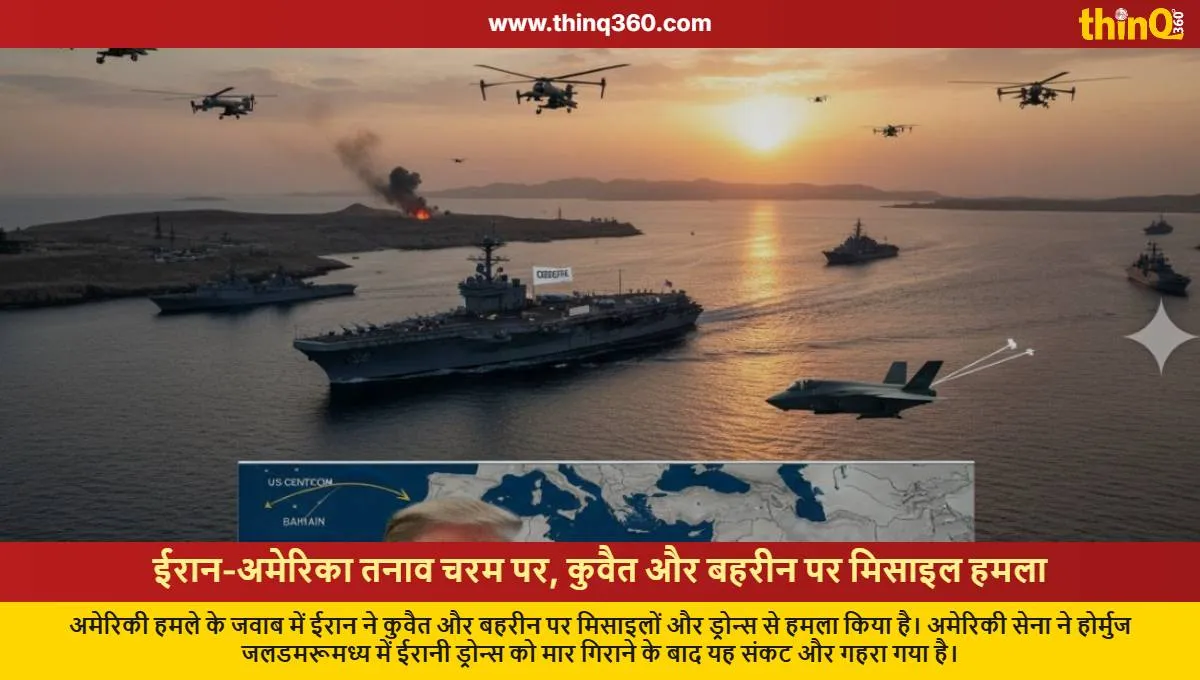
Iran fired drones in the Strait of Hormuz, which were shot down by the US.
In retaliation, the US attacked Iranian radar sites.
Iran counter-attacked by firing missiles at Kuwait and Bahrain.
Trump's warning: Ceasefire will end if an American soldier is killed.
Washington | Tensions between Iran and the United States have reached a dangerous level. In response to a US attack, Iran has launched missile and drone strikes on Kuwait and Bahrain, increasing the risk of instability across the entire Middle East region.
This retaliation follows the downing of four Iranian drones by the US military's CENTCOM unit in the Strait of Hormuz.
Just hours after the drones were shot down, the US military targeted radar sites on Iran's Qeshm Island and at Goruk on the southern coast.
Iran responded swiftly to avenge the US attack. It launched several missiles and drones towards Kuwait and Bahrain.
The Kuwaiti army confirmed on social media that its air defense systems were engaging enemy attacks.
The military alerted citizens that the sounds of explosions could be the result of air defense systems intercepting the attacks.
Growing Crisis in the Middle East
These attacks have further escalated tensions not only between Iran and the US but throughout the Middle East. Both countries are continuously violating the ceasefire.
However, US President Donald Trump does not want a large-scale war in the region.
Trump had previously stated that a ceasefire in that part of the world means 'you're shooting in a much more restrained manner.'
He has made it clear that if any American soldier is killed in an Iranian attack, he will end the ceasefire.
The situation rests on a delicate balance, where a single misstep could trigger a major military conflict. For now, the world's eyes are on the developments in this region.

 बलजीत सिंह शेखावत