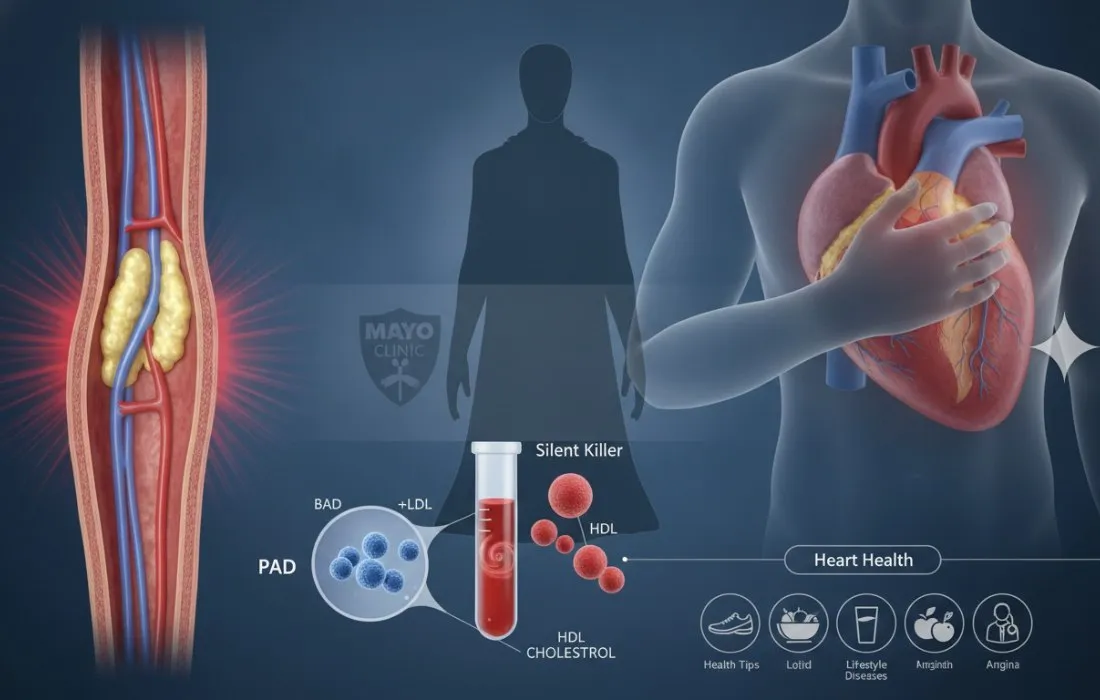
High cholesterol is called a 'silent killer' because it often has no initial symptoms.
Pain or cramping in the legs while walking can be a sign of Peripheral Artery Disease (PAD).
Chest pain or tightness (angina) points towards a blockage in the heart's arteries.
The only certain way to detect high cholesterol is through a blood test (lipid profile).
New Delhi | High cholesterol is often considered a 'silent killer' because, in most cases, it does not show any clear symptoms. But when it starts to build up in the body's arteries, some painful signs can appear that can be dangerous to ignore.
What is the connection between high cholesterol and pain?
According to experts, high cholesterol itself does not cause pain. The pain occurs when cholesterol, also called plaque, accumulates in the arteries.
This buildup makes the arteries narrow and hard, obstructing blood flow to various parts of the body. This blockage is what causes pain and other problems.
Leg Pain: A Sign of Peripheral Artery Disease (PAD)
If you experience pain or cramping in your legs, thighs, or hips while walking, running, or climbing stairs, it could be a symptom of Peripheral Artery Disease (PAD).
This condition occurs when the arteries that carry blood to the legs become narrowed due to plaque. The pain usually subsides with rest, but it is a serious warning.
Other symptoms of PAD include coldness in the feet, changes in skin color, and slow-healing sores.
When the coronary arteries that supply blood to the heart become blocked due to cholesterol, it can cause chest pain or discomfort. This condition is called angina.
This pain often feels like pressure, tightness, or heaviness. It usually occurs during physical activity or stress and gets better with rest.
A Blood Test is the Only Sure Way
It is important to remember that there can be many other causes of body pain. It is not correct to assume high cholesterol based on pain alone.
According to the Mayo Clinic, "High cholesterol usually has no symptoms. It can only be detected through a blood test."
Therefore, if you are experiencing these symptoms, it is essential to contact a doctor immediately. The doctor will recommend a simple blood test called a lipid profile.
Conclusion: Awareness is Prevention
High cholesterol is a serious health problem that increases the risk of heart disease and stroke. Never ignore the signals given by your body, such as pain in the legs or chest. By getting regular check-ups and adopting a healthy lifestyle, you can avoid its serious consequences.

 जोगेन्द्र सिंह शेखावत