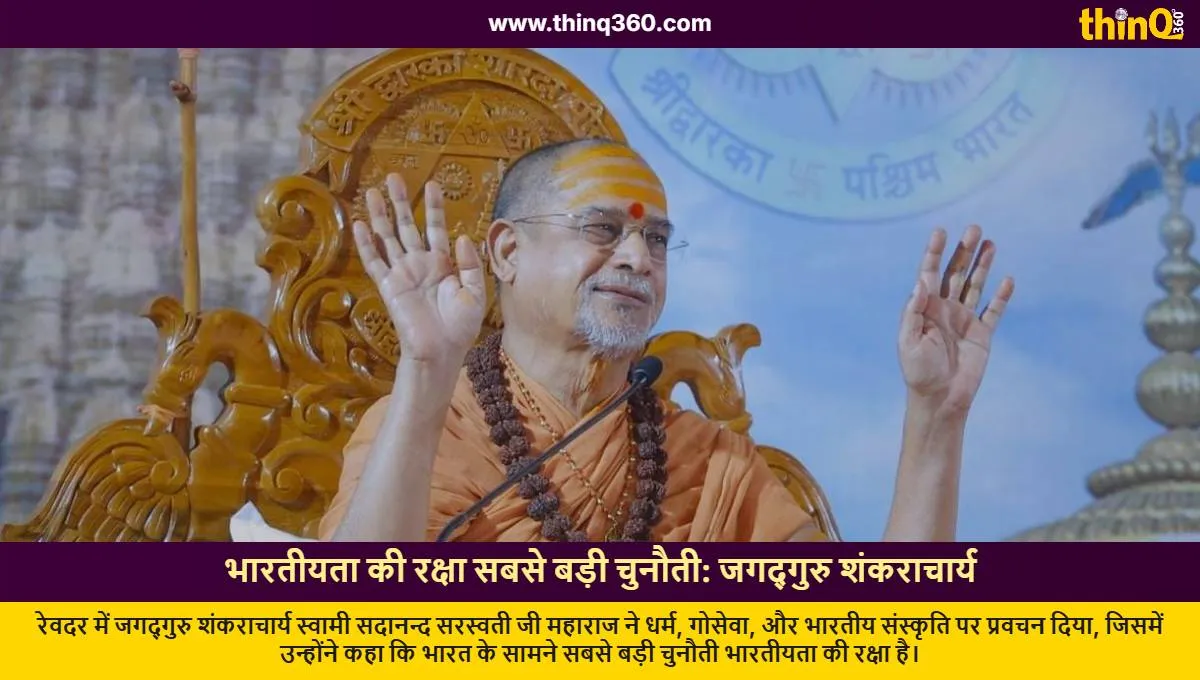
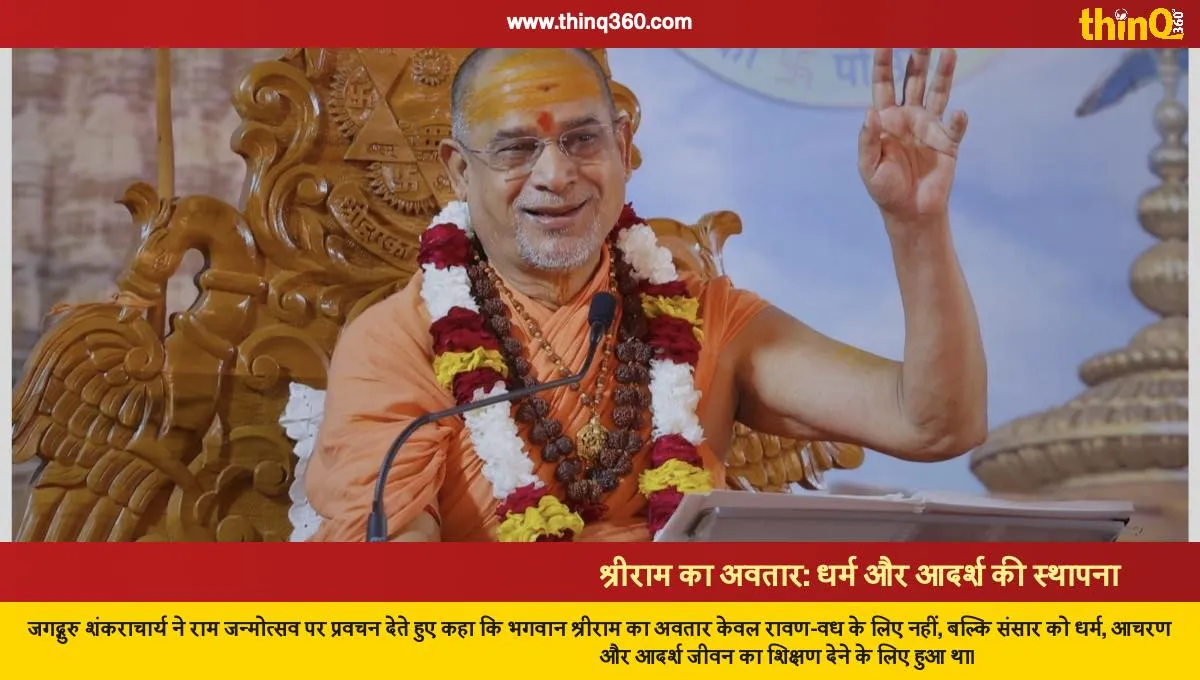
In Revdar, Jagadguru Shankaracharya said that the biggest challenge before India is the protection of Indianness. He gave a message of cow service, guru-sharan, and righteous leadership.
Jagadguru Shankaracharya said that the biggest challenge in India is the protection of Indianness.
Citing the example of Maharaj Dilip, he described cow service as a symbol of sacrifice and duty.
Shankaracharya said that leadership should present an ideal of conduct before governance.
True power awakens in a mantra only through guru-diksha (initiation by a guru), and humanity manifests.
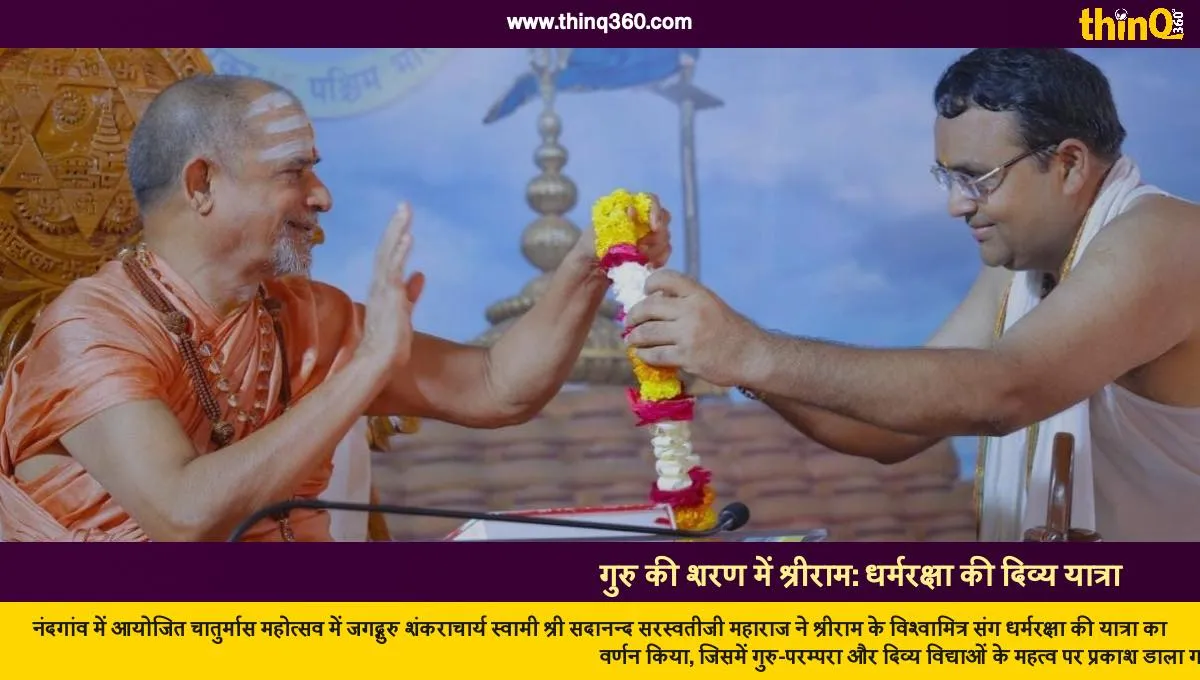
Revdar |In the Shri Surabhi Harihar Chaturmas Aradhana Mahotsav organized in Nandgaon by Shri Godham Mahatirth Pathmeda, located on the holy land of Arbudaranya, Dwarkashardapeethadhishwar Jagadguru Shankaracharya Swami Shri Sadanand Saraswati Ji Maharaj delivered a soulful discourse on dharma, goseva (cow service), guru-sharan (taking refuge in a guru), and Indian culture.
The Biggest Challenge in India is to Protect Indianness
During the discourse, Jagadguru Shankaracharya clearly stated that the biggest challenge before India today is to protect 'Bharatiyata' (Indianness).
He explained that India is not just a name for geographical boundaries, but a vibrant life-vision composed of dharma, guru-tradition, cow protection, sacraments, family system, sacrifice, penance, Vedas-Shastras, and compassion.
The Jagadguru emphasized that protecting the cow is not just about protecting an animal, but it symbolizes the protection of the compassionate and righteous character of Indian culture.
The Episode of Maharaj Dilip's Devotion to the Cow
The Jagadguru narrated the episode of Maharaj Dilip's devotion to the cow, as described in Mahakavi Kalidas's famous work 'Raghuvansham'.
He said that goseva is not merely a religious ritual, but it reflects the Indian life-vision of sacrifice, duty, and protection.
Maharaj Dilip was prepared to offer even his own life to protect the mother cow. This episode teaches us that in Indian culture, the sense of duty before rights and protection before self has been paramount.
'As the King, So the Subjects' — Leadership by Conduct First
Explaining the ancient principle of 'Yatha Raja Tatha Praja', the Jagadguru said that leadership is not just the right to rule, but it is a great responsibility to present an ideal before society.
He mentioned that King Dilip did not just give the message of cow protection, but he presented a living example of it through his own conduct.
He said, “This has been the specialty of Indian leadership—first, practice it yourself, then expect it from society.”
Power Awakens in a Mantra Through Guru-Diksha
Shedding light on the importance of mantra-diksha (initiation), the Jagadguru said that merely knowing the letters of a mantra is not enough.
He explained that when initiation from a guru is combined with faith, discipline, and spiritual practice, only then does the mantra infuse real power into the practitioner's life.
Just as the potential for a huge tree is hidden in a small seed, immense spiritual power is inherent in a mantra. Guru-diksha plants that seed in the soil of the practitioner's heart.
Awakening of Humanity Through Guru-Sharan
The Jagadguru said that merely obtaining a human body does not constitute complete humanity.
True humanity manifests only when discretion, compassion, restraint, service, dharma, and God-consciousness awaken within a person. For this, taking refuge in a guru is extremely essential.
This World is the Maternal Home, the Afterlife is the In-laws' Home
Giving a simple example, he explained the essence of life. He said, “This world is our maternal home, whereas the soul's final journey is towards the afterlife, which is our in-laws' home.”
Therefore, while living in this world, a person should perform such good deeds, dharma, service, goseva, and spiritual practices that their journey to the afterlife also becomes auspicious and pleasant.
The overall message of the discourse was that a sense of service and sacrifice towards the mother cow should be awakened, dharma and character should be incorporated into leadership, and true humanity should arise within man under the refuge of a guru.

 गणपत सिंह मांडोली