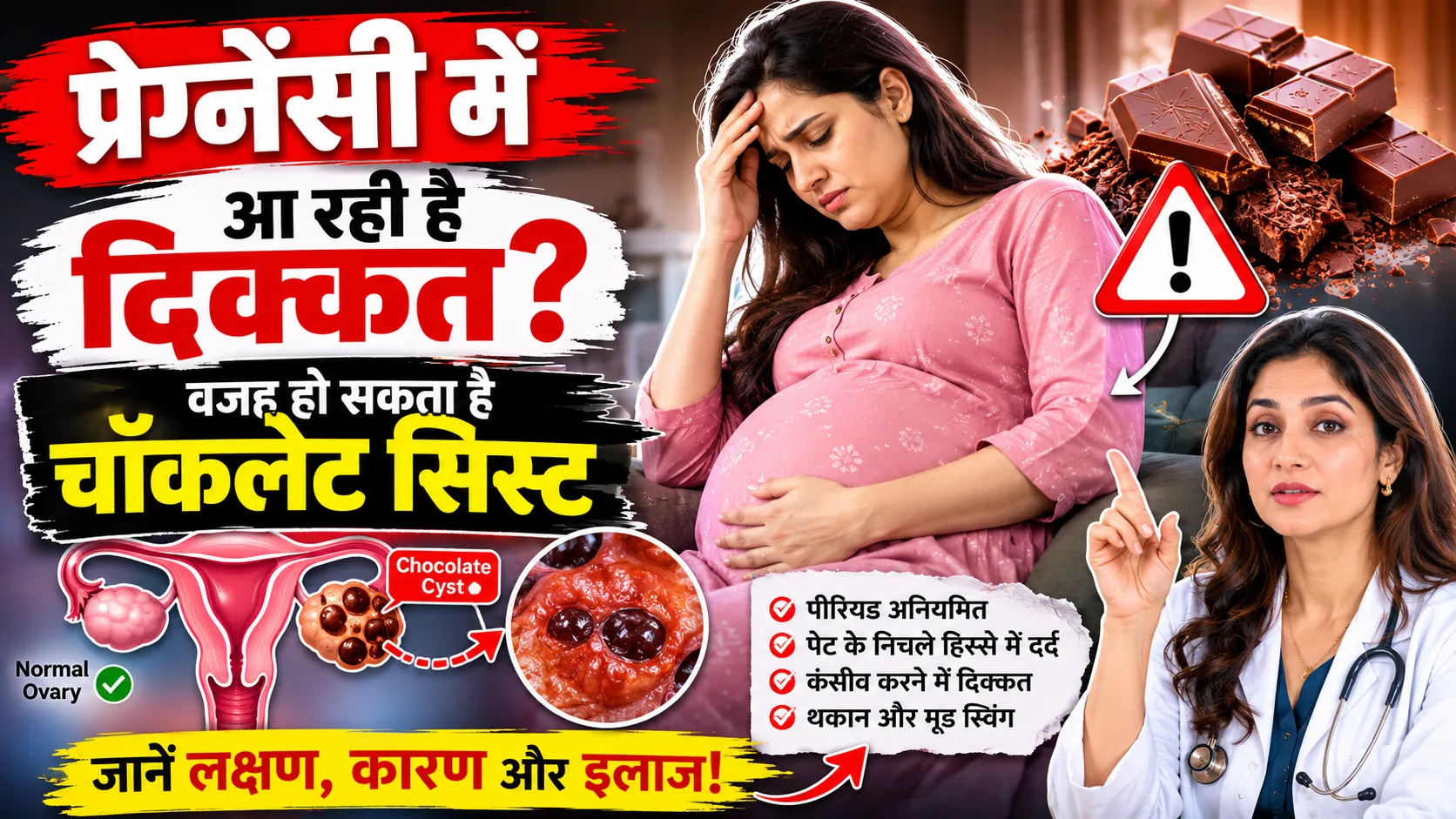
Severe period pain and difficulty in pregnancy could be a sign of a Chocolate Cyst. Learn about its symptoms and treatment according to the Cleveland Clinic.
It is considered normal for women to experience some pain during their periods (menstruation). However, if this pain becomes unbearable every month, it should not be ignored.
Severe cramping in the back and lower abdomen or persistent difficulty in conceiving long after marriage could be a sign of a serious problem. Do not mistake it for general weakness.
According to a report from the Cleveland Clinic, all these symptoms could be due to a specific type of cyst in a woman's ovary, known as a 'Chocolate Cyst' or 'Ovarian Endometrioma'. Let's understand in detail what this disease is and why it is a cause for concern for women.
What Exactly is a Chocolate Cyst?
The name might sound a bit strange, but it has nothing to do with chocolate. In fact, women have a special lining inside the uterus called the endometrium tissue.
When this tissue, for some reason, grows outside the uterus and on the ovary, small sacs (cysts) gradually form there.
According to the NCBI, when bleeding occurs from the uterus during periods, blood also collects inside these cysts. Over time, this old blood becomes thick and dark brown, looking exactly like melted chocolate. This is why it is medically termed a 'Chocolate Cyst'.
According to the Cleveland Clinic report, a chocolate cyst has a direct and serious impact on a woman's fertility.
It can prevent the formation of healthy eggs in the ovary or damage their quality. Sometimes, the cyst becomes so large that it blocks the fallopian tube. Because of this, the egg and sperm cannot meet, and the woman faces difficulties in conceiving.
How Do Doctors Diagnose and Treat It?
If you are experiencing the symptoms mentioned above, it is important to consult a doctor. Doctors confirm the condition through certain tests.
Pelvic Ultrasound: This helps determine the size and location of the cyst.
MRI Scan: This may be done for a more detailed examination.
Treatment Options for Chocolate Cyst
The treatment for a chocolate cyst depends on several factors, such as the woman's age, the severity of her symptoms, and whether she plans to conceive in the future.
1. Medications and Hormone Therapy
If the cyst is small and the symptoms are mild, the doctor may prescribe some medications or birth control pills to reduce pain and regulate hormones. This stops the cyst from growing.
2. Surgery (Laparoscopy)
If the cyst has become very large, the pain is unbearable, or there is persistent difficulty in getting pregnant, doctors recommend surgery. In this, the cyst is removed through a minimally invasive procedure (laparoscopy) without a large incision, which does not harm the ovary.
Disclaimer: The information provided in this article is intended solely for the purpose of raising awareness about diseases and health problems. It is not a substitute for qualified medical opinion. Readers are advised not to try any medication, treatment, or remedy on their own but to consult an expert or doctor in the relevant medical field.

 जोगेन्द्र सिंह शेखावत