
 thinQ360
Understanding Replacement Level
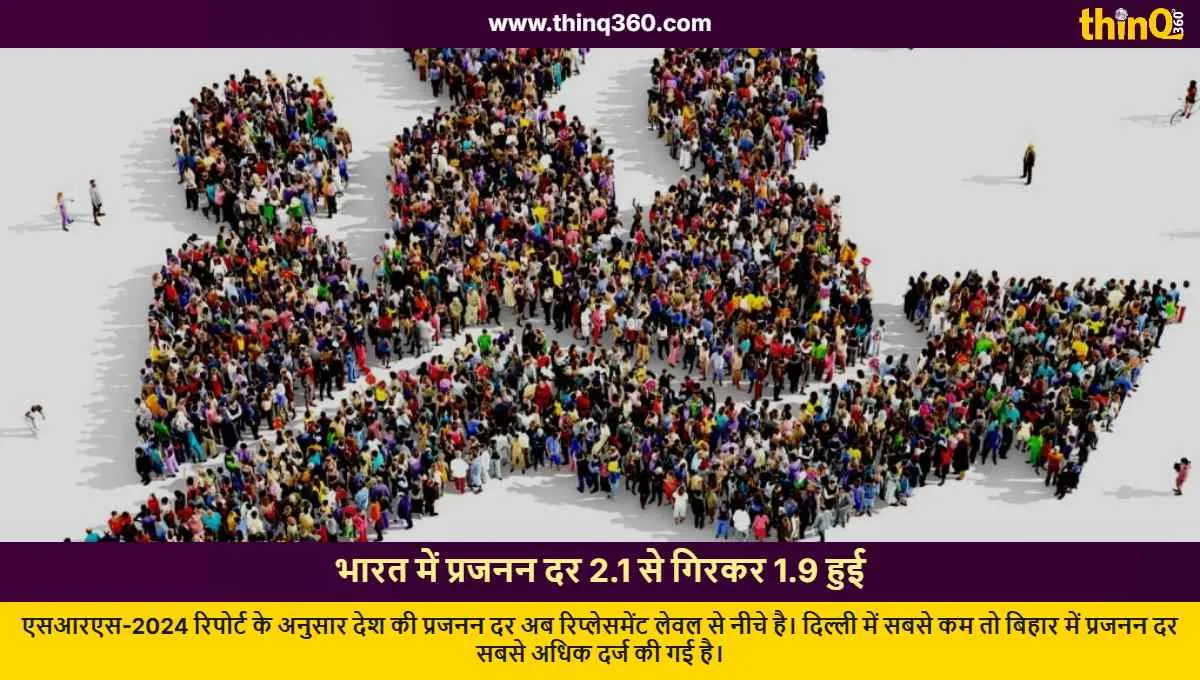
Experts define the replacement level of 2.1 as the rate at which a generation exactly replaces itself. This keeps the population stable over time. Since the rate has fallen to 1.9, it signals a major demographic shift. If this trend continues, the younger population will eventually decrease, impacting the economy and social structure.State-wise Analysis
While the national average is low, states like Bihar, UP, MP, and Rajasthan are still above the replacement level. Bihar has the highest TFR at 3.0. Conversely, Delhi recorded the lowest TFR at 1.2. Southern states like Tamil Nadu also show low rates around 1.3, indicating a shrinking child population.Rural vs Urban Gap
In Rajasthan, there is a clear divide: rural areas have a TFR of 2.4, while urban areas are at 2.1. This pattern is consistent across several states.Aging Population Challenges
India's working-age population (15-59) has grown to 66.4%. However, the elderly population (60+) has also increased to 9.7%, with Kerala leading at 15%."The shift in youth mindset is a major reason for falling TFR. Delayed marriages and lifestyle changes are key factors." - Dr. Anita SharmaIn conclusion, while the demographic dividend is active, India must prepare for an aging society and manage the rural-urban fertility gap effectively.
*Edit with Google AI Studio