Market Price Update
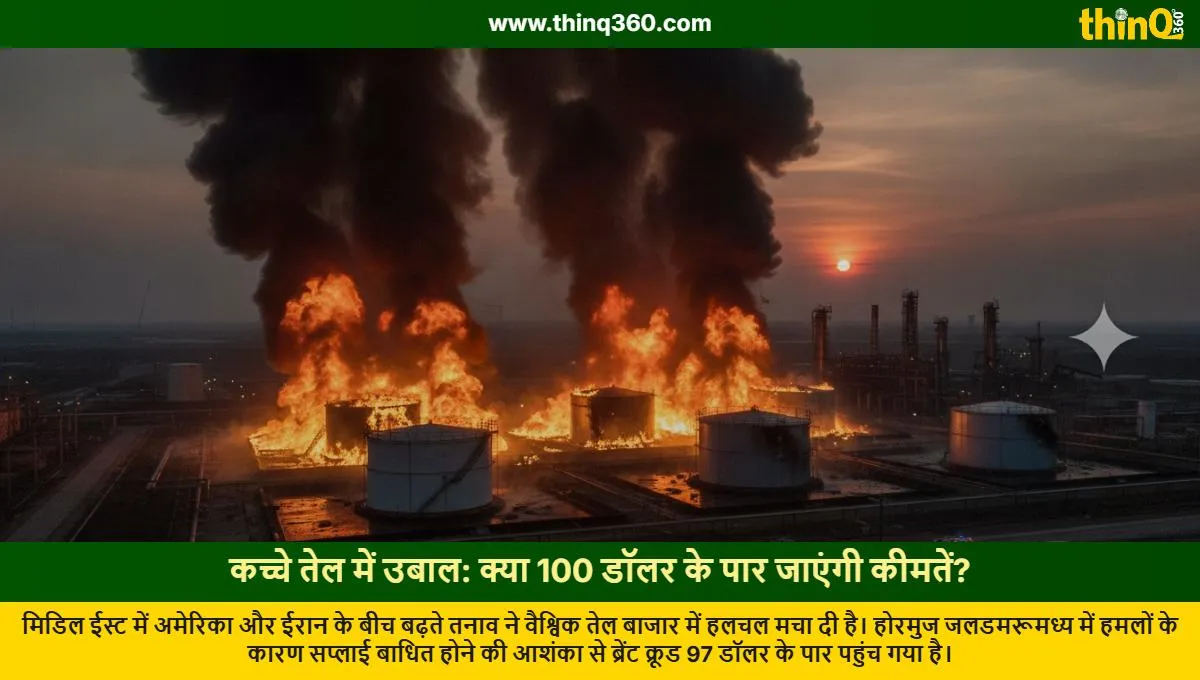
On Monday morning, Brent crude was seen trading at $97.02 per barrel in the international market, up by 0.77% or $0.74.
Meanwhile, WTI crude was trading at $92.26 per barrel, an increase of 0.85% or $0.78. If this rally in crude oil continues, prices could soon cross the $100 mark, intensifying fears of a hike in petrol and diesel prices.
Strong Rally Last Week as Well
A strong rally was also seen in crude oil last week. Brent crude became more expensive by about 7.8%, while the price of WTI recorded an increase of nearly 10%.
The resumption of attacks between the US and Iran has directly impacted oil transit through the Strait of Hormuz. Normally, about one-fifth of the world's oil supply passes through this route.
Oil Tankers Being Targeted at Sea
A major reason for the escalating tension is the targeting of oil tankers at sea. According to the US Central Command, the US military attacked three Iranian oil tankers on Saturday.
- One of these tankers was near Iran's Kharg Island, the country's main oil export terminal.
- In response, the navy of Iran's Islamic Revolutionary Guard Corps (IRGC) also claimed to have targeted three oil tankers.
- According to Iran, these tankers were passing through unauthorized routes in the Strait of Hormuz.
- Additionally, it was claimed that three US ships were also targeted.
The Nature of Conflict is Changing
According to maritime intelligence firm Marisks, Saturday's events represent a major shift in maritime conflict. The company states that commercial oil tankers are now also becoming a tool for exerting economic pressure between the two countries.
This has blurred the clear line that previously existed between military conflict and normal commercial shipping.
Decline in Numbers
According to analytics firm Kpler, an average of only 10 commodity ships have passed through the Strait of Hormuz daily in the last 10 days, the lowest level since May.
Iran has also indicated that a restricted zone may be declared outside the Strait of Hormuz in the coming days.
OPEC+ Does Not Change Production Policy
Meanwhile, the Organization of the Petroleum Exporting Countries and its allies (OPEC+) has not made any changes to its oil production policy for October. After a meeting on Sunday, the organization stated that a future decision would be made after reaching an agreement on new production quotas.
According to analysts at ANZ, the tension between the US and Iran is unlikely to end soon, and a prolonged conflict with limited military action may continue.
When Will Supply Normalize?
Analysts estimate that oil exports may remain under pressure for the remainder of 2026. A gradual normalization of supply could begin in late Q4 2026.
A full return to pre-conflict levels of oil transit could take until the end of Q1 or the beginning of Q2 2027.

 बलजीत सिंह शेखावत