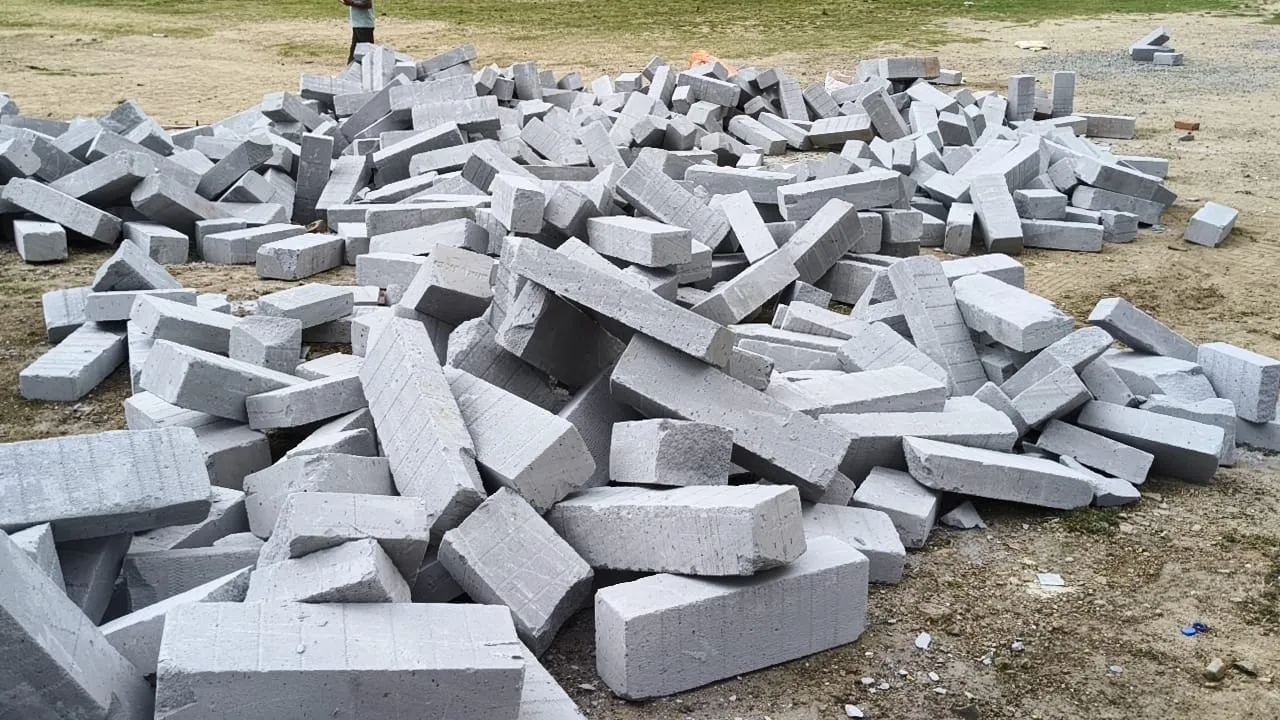
A large quantity of illegal construction material was seized in Gora Chhapra, Mount Abu.
The seized items include cement blocks, 21 bags of cement, and tiles.
The Municipal Commissioner has formed an investigation team for a thorough probe into the matter.
Bringing cement blocks into Mount Abu is not permitted, yet smuggling continues.
MOUNT ABU | The municipal administration has intensified its efforts to curb illegal construction in the tourist city of Mount Abu. In a major operation late on Monday evening, a large quantity of illegal construction material, hidden near a crematorium in the Gora Chhapra area, was seized.
Alertness of Sanitation Workers Led to Disclosure
The entire matter came to light when municipal sweepers (Jamadars) Manoj and Vishal were on their regular cleaning inspection in their beat area.
They noticed some suspicious material near a house close to the crematorium. Upon closer inspection, they were astonished to find a large cache of cement blocks.
It is interesting to note here that in Mount Abu, sweepers and sanitation workers are also tasked with keeping an eye on illegal constructions in their respective areas.
Fulfilling this responsibility, both employees immediately informed the Municipal Commissioner.
Municipal Team Reached the Spot
Upon receiving the information, the Municipal Commissioner dispatched a team led by Assistant Engineer Navdeep Singh to the location.
The team arrived and found a large number of cement blocks, 21 bags of cement, and some tiles hidden there.
Officials questioned the local people and asked the owner of the material to present documents, but no one came forward. Subsequently, the team seized all the material.
Why Are Cement Blocks Banned in Mount Abu?
The biggest question is that permission to bring cement blocks into Mount Abu is not granted at all. There is no provision for it in the form filled out for bringing construction materials.
In such a scenario, the discovery of such a large quantity of blocks raises several serious questions.
In fact, people smuggle blocks illegally to carry out unauthorized constructions overnight. Using blocks allows walls to be erected quickly with less sand and cement.
This is not the first such incident. On January 12 of this year, a bus was caught, which, except for the front two seats, was entirely filled with cement blocks.
This incident shows how prevalent the trend of illegally bringing blocks into Mount Abu is and that it is being done in an organized manner.
The Complicated Permit Process and Big Questions
This incident has once again highlighted the complex process of obtaining construction permits in Mount Abu.
For a common person, getting a construction permit here is no less than a challenge. The process, from submitting an application to inspections by officials and getting a token, is so long and complicated that it takes months, even years.
People say that getting a token here is considered no less than a major award.
On the other hand, influential and wealthy people allegedly get permits easily. This contradiction is a major reason for promoting illegal construction.
This is a serious matter. A thorough investigation will be conducted into how such a large quantity of banned construction material reached the city. Strict action will be taken against the culprits, and we will find out who is involved in this network.
Commissioner Orders an Inquiry
The Municipal Commissioner is also surprised by this entire incident. Seeing the seriousness of the matter, he has immediately constituted an investigation team.
This team will investigate who owned the material and how it entered the city without any permission.
Furthermore, the team will conduct a search operation in the entire surrounding area to find out if illegal material has been hidden elsewhere in a similar manner.
This action has caused a stir among those involved in illegal construction in Mount Abu. Now it remains to be seen what new revelations emerge from the investigation and what action is taken against the people involved in this racket. This step is crucial for maintaining the ecological sensitivity of the city.

 गणपत सिंह मांडोली